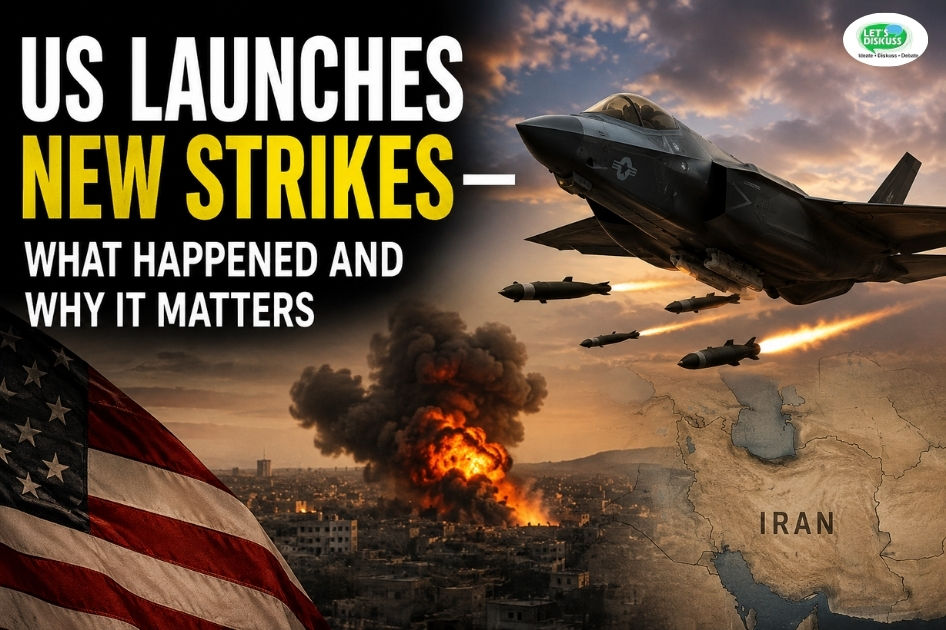
US Launches New Strikes — What Happened and Why It Matters
- Himanshu Letsdiskuss
- May 29
- 4 min read

The United States has launched new military strikes, placing the Middle East back in the global spotlight and raising fresh concerns about regional stability. The operation has triggered reactions from governments, analysts, and international organizations, all of whom are closely monitoring developments.
As tensions continue to rise, many people are looking for answers about what happened, why the strikes were launched, and what consequences they could have for global politics and security.
Highlights
The United States carried out new military strikes targeting locations considered a threat to its interests.
The operation has increased attention on security issues in the Middle East.
Global leaders are urging caution and calling for diplomatic solutions.
The strikes have renewed debate about the future of the Iran Deal.
Analysts are discussing the long-term impact on U.S. foreign policy and regional stability.
What Happened?
According to reports, the United States launched targeted strikes as part of its broader security strategy in the region. Officials stated that the action was intended to address threats and protect American interests.
Military operations of this nature often attract significant international attention because they can influence diplomatic relations, economic markets, and security policies around the world.
While supporters view the strikes as a necessary response to security concerns, critics argue that military actions can increase tensions and make diplomatic solutions more difficult.
Why These Strikes Matter
The Middle East remains one of the most strategically important regions in the world. The area is home to major energy resources, critical trade routes, and several ongoing geopolitical disputes.
Any increase in military activity can affect global oil prices, investor confidence, and international relations. This is why the latest U.S. strikes are being watched closely not only by regional governments but also by policymakers and businesses worldwide.
Experts believe that the coming weeks will be crucial in determining whether tensions continue to rise or whether diplomatic efforts can help prevent further escalation.
The Iran Deal and Its Relevance Today
The latest developments have once again brought attention to the Iran Deal, one of the most debated international agreements of recent decades.
The agreement was designed to limit Iran's nuclear activities in exchange for relief from economic sanctions. Supporters argued that the deal helped reduce the risk of nuclear proliferation and created opportunities for diplomacy.
Critics, however, claimed that the agreement did not adequately address broader security concerns. As a result, the Iran Deal has remained a central topic in discussions about Middle East policy and international security.
With new military actions making headlines, many observers are revisiting the Iran Deal to understand whether diplomatic agreements can still play a role in reducing tensions.
Understanding the US and Iran Deal Debate
The broader discussion often centers on the US and Iran Deal, which symbolizes years of diplomatic efforts between Washington and Tehran.
Relations between the two countries have experienced periods of negotiation, confrontation, sanctions, and political disagreement. The US and Iran Deal became a significant example of how diplomacy can be used to address complex international challenges.
Supporters of negotiations believe that dialogue remains the most effective way to prevent conflict and promote stability. Others argue that strong economic and military measures are necessary to protect national interests.
The recent strikes have once again raised questions about whether future agreements between the United States and Iran are possible and what form those agreements might take.
Global Reactions
International reactions have been mixed. Some governments have expressed support for efforts aimed at maintaining security and protecting strategic interests. Others have emphasized the need for restraint and warned against actions that could increase instability.
International organizations continue to encourage diplomatic engagement, stressing the importance of communication and conflict prevention.
Political analysts suggest that the response from regional powers in the coming days could play a major role in shaping future developments.
Economic Impact
Military tensions in the Middle East often have economic consequences. Markets closely watch such developments because uncertainty can affect oil supplies, transportation networks, and business confidence.
Investors are paying attention to whether the situation remains limited or develops into a larger regional issue. Any prolonged instability could have implications for energy prices and international trade.
For this reason, the significance of the latest strikes extends beyond military objectives and into broader economic and political considerations.
What Happens Next?
The future remains uncertain. Governments around the world are carefully evaluating the situation and considering their next steps.
Several outcomes remain possible, including increased diplomatic engagement, additional economic measures, or further security actions. Much will depend on how regional actors respond and whether international efforts succeed in reducing tensions.
The coming weeks are expected to be critical for determining the direction of U.S. policy and the overall stability of the region.
What Trump Says on the Deal
Former President Donald Trump has consistently criticized the Iran nuclear agreement. Trump argued that the deal was insufficient because it failed to address several long-term security concerns and provided benefits to Iran without securing stronger guarantees.
During his administration, the United States withdrew from the agreement and pursued a strategy of economic pressure through sanctions. Trump maintained that a tougher approach would lead to a better outcome and improve national security.
Supporters believe Trump's position demonstrated strength and protected American interests, while critics argue that diplomatic engagement offered a more sustainable path toward stability.
As discussions about regional security continue, Trump's views on the deal remain an important part of the broader debate surrounding U.S. foreign policy, the Iran Deal, and the future of relations between the United States and Iran.
Conclusion
The latest U.S. strikes have once again highlighted the complex relationship between military action, diplomacy, and global security. While governments continue to assess the consequences, the world is watching closely to see whether tensions ease or further developments reshape the geopolitical landscape.
The events also renew attention on key topics such as the Iran Deal, the US and Iran Deal, and the continuing debate over how best to balance national security with diplomatic engagement.


Comments